
Quick Summary

How long should you wait before seeing real results from your construction marketing strategy? This article breaks down the timeline and metrics you should track to determine if your marketing efforts are paying off. Learn about the stages of visibility, how early metrics like website traffic lead to inquiries, and when to expect meaningful sales growth. We’ll guide you on when to adjust your strategy or push forward for long-term success.

→ Enjoyed reading this? Join the email newsletter.
My next-door neighbour picked up the violin. He’s 16.
At first, it was all clumsy notes and awkward rhythms. He practiced over and over, but progress felt painfully slow. Well, to me at least. It’s hard to listen to through our apartment walls.
I can’t help but wonder: Is he getting better, or just making noise?
Is he progressing, or spinning his wheels? How long will he keep practicing before deciding if it’s not working?
Maybe you can relate with your construction marketing strategy. Starting something new can feel a little cringe. And when progress isn’t happening as quickly as you hoped, it feels like you’re wasting your time, money, and energy—maybe even making a fool of yourself.
And that’s what we’re digging into today.
Question of the Week
“We’ve been trying a new marketing strategy for four months, but I feel like it’s not working. I understand it takes time — but how much time is enough to see results? When should we pivot, quit, or double down?”
– Anthony, Millsaw Architectural
Anthony is not alone. Many construction company owners ask this same question—not because they doubt marketing, but because it is difficult to measure marketing performance without clear expectations. When results are slow, it is natural to wonder if you are wasting time and money or if things are quietly moving in the right direction.
I can’t speak to his strategy specifically since I don’t have all the details. But I can share what’s normal in my experience so you can judge for yourself.
How Long Should You Wait for Marketing Results?
Imagine a waterfall. It starts with tiny droplets. Not enough to drink from—but over time, those droplets grow into a steady stream. Eventually, it becomes strong and consistent enough to power an entire village.
Marketing works the same way. It takes time to build momentum. Early progress may be slow or invisible, but it compounds. Success in month one looks very different from success in month nine.
This is why it is important to set realistic expectations when you measure marketing performance. Your results will always match the level of time, effort, and consistency invested.
To explain this clearly, I use something called Cascading Metrics.
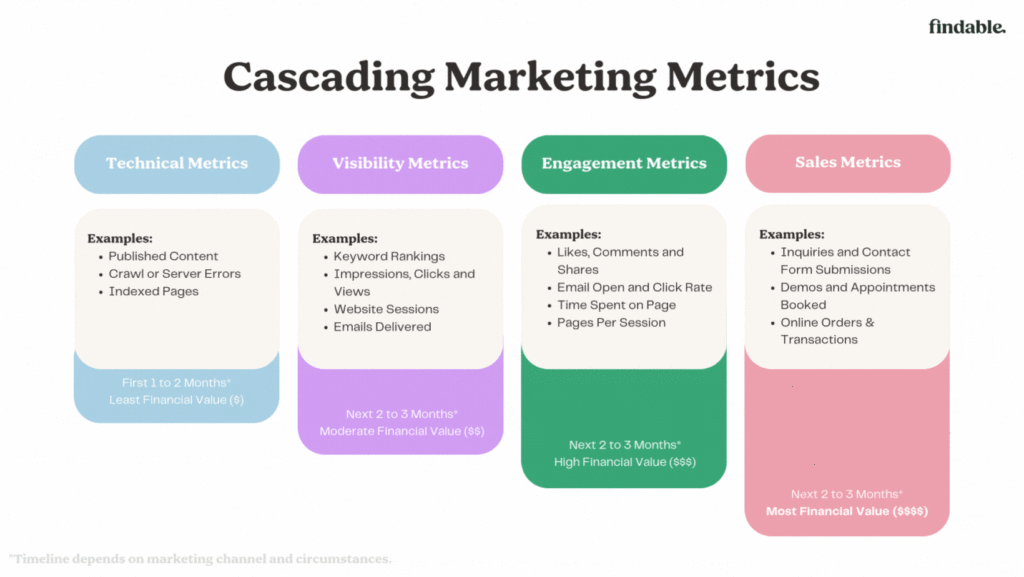
Take a look at the last column in the chart: Sales Metrics. That’s your end goal. Sales inquiries, form submissions, appointments booked, etc.
You probably don’t care about numbers like website hits or social media comments, i.e.,all the Marketing Metrics that come before. They’re nice, but they don’t pay the bills.
But here’s the thing: those early metrics are the droplets. They eventually turn into sales metrics. And how well they perform now shows you what to expect later. They give you a glimpse of what’s coming.
So, where are you in the chart? In the waterfall?
Anthony mentioned he’s been working on his strategy for four months. According to the chart, he’s in the Visibility Metrics stage. This stage is about seeing keyword rankings, impressions, or website hits increase month after month. That’s what success looks like for him right now.
Between nine and 12 months of marketing, he can expect more—like sales inquiries.
“I feel like it’s not working.”
A construction marketing strategy isn’t just an art. It’s a science. A good marketing strategy is based on data.
When Anthony said, “I feel like it’s not working,” that’s usually a sign he’s not looking at the numbers. He’s guessing instead of measuring. And that tells me his strategy doesn’t have clear targets.
You need targets like sales inquiries, engagement, website visits, keyword rankings, and new content created. And you need those targets to be broken down by quarter. They help you see if you’re on track.
If you don’t have those targets, let’s talk about what’s realistic to expect. We’ll start at the bottom of the “waterfall” and work our way up.
Realistic Sales Metrics
Your future sales goals should be based on past sales data.
Look at previous years and count how many inquiries you got, month by month, and where they came from.
Aiming for double the inquiries and a 10–15% revenue increase is realistic after a year of consistent marketing. Not 4 months, not nine—but 12 months.
For example, if you had 10 inquiries last year, aim for 20 this year. And if your conversion rate was 50% and each client was worth $250,000, a realistic target would be 10 paying projects and $1.25M more revenue this year.
Don’t have this data? That’s common. But it’s important to start tracking now. Ask every inquiry how they heard about you. Without it, you’ll keep guessing instead of measuring.
Realistic Marketing Results
Ignore overnight success stories. Marketing doesn’t move fast in construction—buying cycles are long, trust takes time, and projects involve multiple decision-makers.
Here’s what realistic looks like:
| After this much time… | You should see… |
|---|---|
| 90 days | Increased website traffic, content engagement, more visibility |
| 6 months | Early inquiries, referral growth, higher bid activity |
| 9 months | Consistent website leads + repeat engagement |
| 12 months | Measurable revenue impact + better-quality project opportunities |
If you’re consistent, your sales inquiries should double within 12 months. Not in 4 months—not in 6—but 12.
“When should we pivot, quit, or double down?”
Using the waterfall analogy one last time: If the water isn’t flowing consistently, the best way to figure out why is to climb up and take a closer look.
- Maybe a beaver built a dam and is blocking the flow.
- There’s a crack in the bedrock, causing leaks along the way.
- Or maybe the season is changing, and the water is freezing.
It’s the same with your marketing.
Compare where you are in your construction marketing strategy with the targets you had set for this stage. The data will show you if you’re on the right track and should keep going, if you need to pivot, or if it’s time to double down.
Need help measuring your marketing performance?
If you’re looking for a second opinion on your strategy or want a professional to help you create a data-driven strategy, I can help. You can book a free 20-minute call with me to discuss how Findable can support your construction company’s growth.
But if you’re not quite ready to chat, I hope this post answered some of your questions.
Until next Thursday,
Daniela
CEO at Findable Digital Marketing