Digital marketing for construction companies does not have to be complicated. Whether you are a general contractor, commercial builder, subcontractor, or equipment rental business, the right construction business marketing strategies can help you generate consistent leads and win better projects. In this guide, we break down how to market a construction company step by step – without guesswork or complicated tactics.
This article was written in collaboration with Mia Giommi.
Whether you’re a general contractor, commercial builder, equipment rental firm, condo developer, or anyone in the AEC indsutry, a thoughtful marketing strategy can help you fill your pipeline, win higher-value projects, and become the go-to expert in your space.
If you’ve relied on word of mouth until now and wish someone had just taught “marketing for construction” in school—you’re in the right place. Let’s break it all down, step by step.
Here’s exactly what we’re covering in this article:
- Define Your Construction Marketing Goals
- Use Data to Breakdown the Goals
- Identify Your Target Customer
- Differentiate Through Positioning
- Create a Client-Centric Marketing Strategy
- Turn the Marketing Strategy into an Action Plan
- Execute It Yourself vs. Hire a Construction Marketing Agency
- Nurture the Construction Marketing Strategy
Let’s dive in!
Step 1: Set Digital Marketing Goals for Your Construction Business
Before you create a marketing strategy, get clear on what success looks like for your company. Not all growth goals are created equal—especially in construction, where project timelines, seasonal demand, and niche services vary widely.
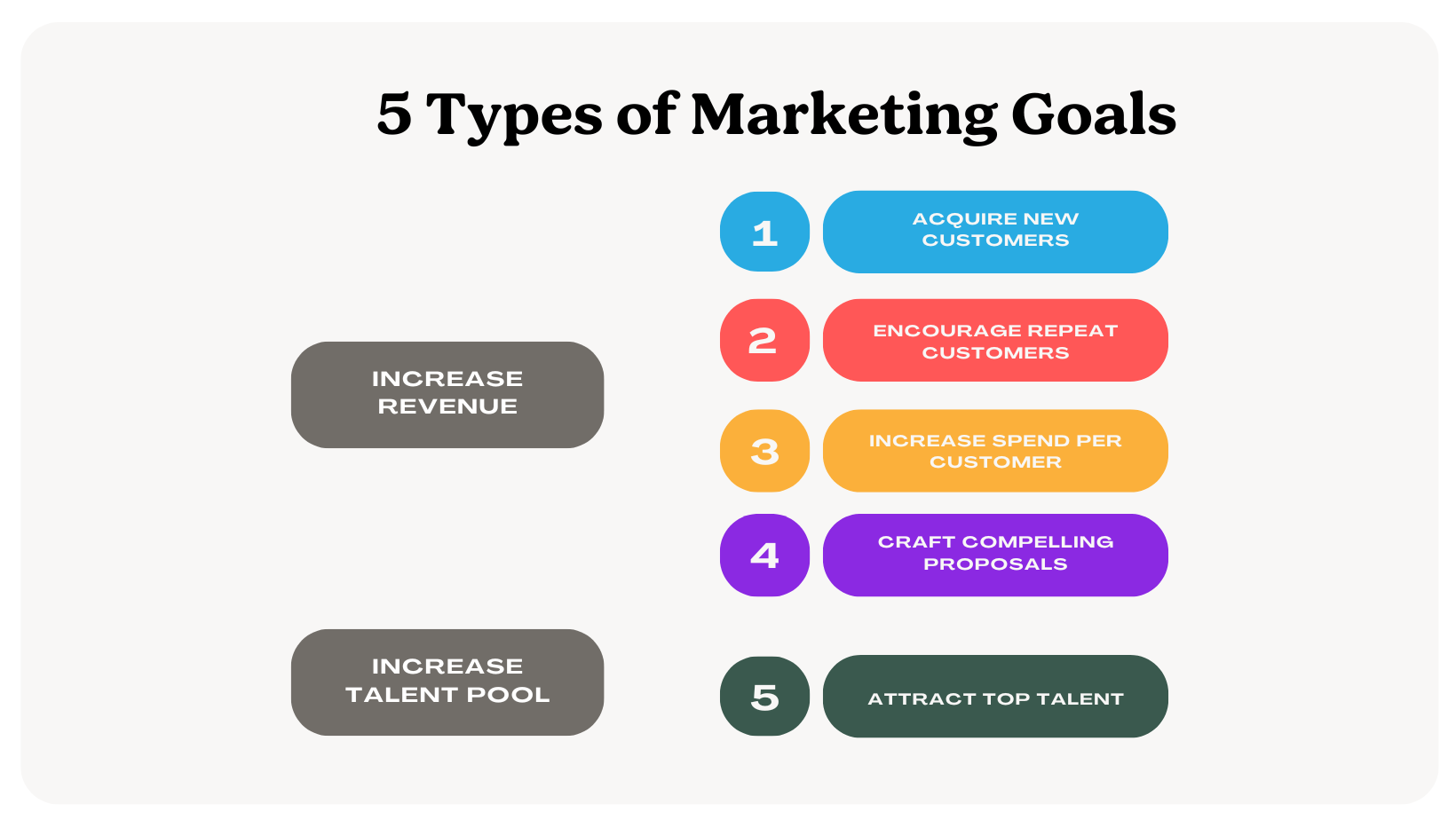
Here are five construction-specific marketing goals we see most often:
- Get invited to more bids. If you want more work in your pipeline, your marketing should focus on visibility, credibility, and relationship-building with developers, architects, and general contractors.
- Win more proposals. Work closely with your estimating and project teams to improve proposal quality, showcase case studies, and highlight differentiators like safety record, schedule adherence, or LEED expertise.
- Book larger or more profitable jobs. Position your company as the go-to for complex or higher-value builds—whether that’s multi-phase commercial projects, retrofits, or industrial design-build.
- Secure repeat or referral business. Stay top of mind with past clients, trade partners, and referral sources. This is especially effective for construction managers and equipment rental companies.
- Attract skilled trades and staff. A solid employer brand will help you compete for project managers, superintendents, and Red Seal trades. Use marketing to highlight your site culture, advancement opportunities, and project impact.
Each goal will require a tailored marketing strategy and timeline. Start with one or two that will have the most impact on your business in the next 6–12 months.
Step 2: Use Data to Breakdown the Goals
If you’re wondering how to market a construction company, start by setting measurable goals. Without clarity, marketing feels random and ineffective. Most construction businesses struggle with marketing because they jump straight into tactics like social media or Google Ads before creating a strategy.
Before you set future marketing goals, you need to understand how your construction business is currently performing. Without historical context, you’re likely to set targets that feel good but aren’t grounded in reality.
Here are a few metrics construction companies should track regularly:
- Proposals submitted and win rate. How many bids did you submit last quarter, and how many did you win?
- Lead sources – Do most opportunities come from referrals, repeat work, LinkedIn, your website, or jobsite visibility?
- Close rate. How many of your initial inquiries or downloads turn into actual site visits, quotes, or contracts?
- Average job size. What’s your typical contract value, and are you moving toward higher-margin projects?
- Sales cycle length. How long does it take from first contact to contract signed?
Example: If your goal is $6M revenue this year and your average project is $300K, you need 20 jobs. With a 25% close rate, that means 80 qualified leads. Now your marketing goal is clear: generate 80 leads—not just “do more marketing.
If you’re not actively tracking these metrics yet, start simple: spreadsheets, CRM tags, even whiteboard tallies. Marketing that ties directly to operations will always outperform marketing done in a vacuum.
Understanding these numbers helps you set goals that align with revenue growth rather than vanity metrics like followers or impressions. It also helps you choose the right marketing channels—whether that’s improving your website, running Google Ads campaigns, or building partnerships with referral sources.
Step 3: Identify Your Ideal Construction Clients
Your marketing efforts will only work if they are built for the right audience. Too many construction companies try to market to everyone—and end up attracting no one. The clearer you are about who you want to work with, the easier it will be to build content, quotes, proposals, and lead generation campaigns that convert.
In construction, your target customers could be …
- General Contractors – You’re a subcontractor aiming to win more packages from mid-sized or tier-one GCs.
- Developers / Owners – You’re a design-build firm or GC marketing directly to commercial or condo developers.
- Procurement Teams – You offer equipment rentals or multi-year services for industrial sites and need to reach purchasing officers.
- Site Superintendents or Project Managers – Especially relevant for equipment rentals or niche services like hoisting, fencing, or formwork.
- Referral Partners – Architects, engineers, and consultants who can bring your company into RFPs and design-build opportunities earlier.
Once you identify who you need to target to reach marketing goals, the next step is to profile them. Research them, talk to them, look for patterns and document your findings. The better you know your ideal customer, the easier it will be for you to market to them and for them to find you.
The following steps to creating a marketing strategy for your construction business will be easier and more successful when you identify your target customer.
There are two ways to profile your target customers:
- Demographics
- Psychographics
Research Their Demographics
Demographics refer to data about the population you’re trying to attract 1. This typically includes their occupation, location, income level, education level, and marital status.
Ask:
- Are they commercial, residential, or industrial builders?
- Do they build in urban cores, rural developments, or heavy industrial zones?
- Are you targeting firms that bid on public infrastructure? Or private-sector retail and hospitality?
- Who makes purchasing decisions—an owner, PM, or centralized procurement team?
- What platforms do they use? LinkedIn, construction bidding directories, or local association websites?
Understanding demographics helps you know where to show up—digitally and in person. It informs your ad placements, content tone, email targeting, and more.
- Are they risk-averse or innovation-driven?
- Do they prioritize cost, schedule, or aesthetics?
- What’s their biggest bottleneck on a project?
- Who do they trust to make recommendations?
The more clearly you understand what your ideal client cares about, the more easily you can show up with messaging that resonates—and wins their business.
Research Their Psychographics
Psychographics go one step further. They consider more subjective information like interests, beliefs, fears, dreams, desires, lifestyles, and habits 2. Psychographics will help you create a marketing strategy that speaks to their emotions. It’s the kind of information that makes your customers think: “Wow — they understand me. If they get me, I bet they can help me.”
Some psychographic questions to consider for your target customer might be:
- What are their values?
- How do they make purchasing decisions?
- What does a typical day look like for them?
- For residential builders or developers, consider:
- What motivates them to break ground on a project?
- Are they driven by community impact, ROI, or design legacy?
- For commercial and industrial firms:
- What does success look like to them—on-time delivery, no change orders, or safe, scalable execution?
- How do they evaluate vendors: by price, reputation, or process alignment?
The more intimately you understand your dream client — and their needs, wants, and desires (really put yourself in their shoes here!) — the more impactful your marketing will be.
This is why we tell construction companies to focus more on psychographics in their marketing. Psychographics will help you better empathize with their problems, present more targeted solutions, and create magnetic messaging that primes them to work with you.
Document Your Research and Create a Profile
You don’t need a fancy market research firm to help you profile your target customers.
- Follow them online. You can learn a lot by reading their conversions on social media, forums and online communities.
- Talk to them. Go to events, arrange coffee chats and be curious.
- Make yourself available to them. Be open to having a preliminary sales conversation with anyone. They may not have the budget and scope to sign them on as a client, but if they’re in a location or sector you want to target, you can learn a lot about them through a 30-minute sales call.
Document your findings and keep them updated as you learn more about them with time. This should be a living document.
Step 4: Position Your Construction Company to Stand Out
Most construction companies struggle with one major problem: they sound the same as their competitors. That is why positioning is critical—it makes your company the obvious choice for the right clients.
Take a quick look at Houzz 3 in your city and you’ll find thousands of general contractors listed. In San Francisco, for example, over 27,000 general contractors are listed on Houzz.
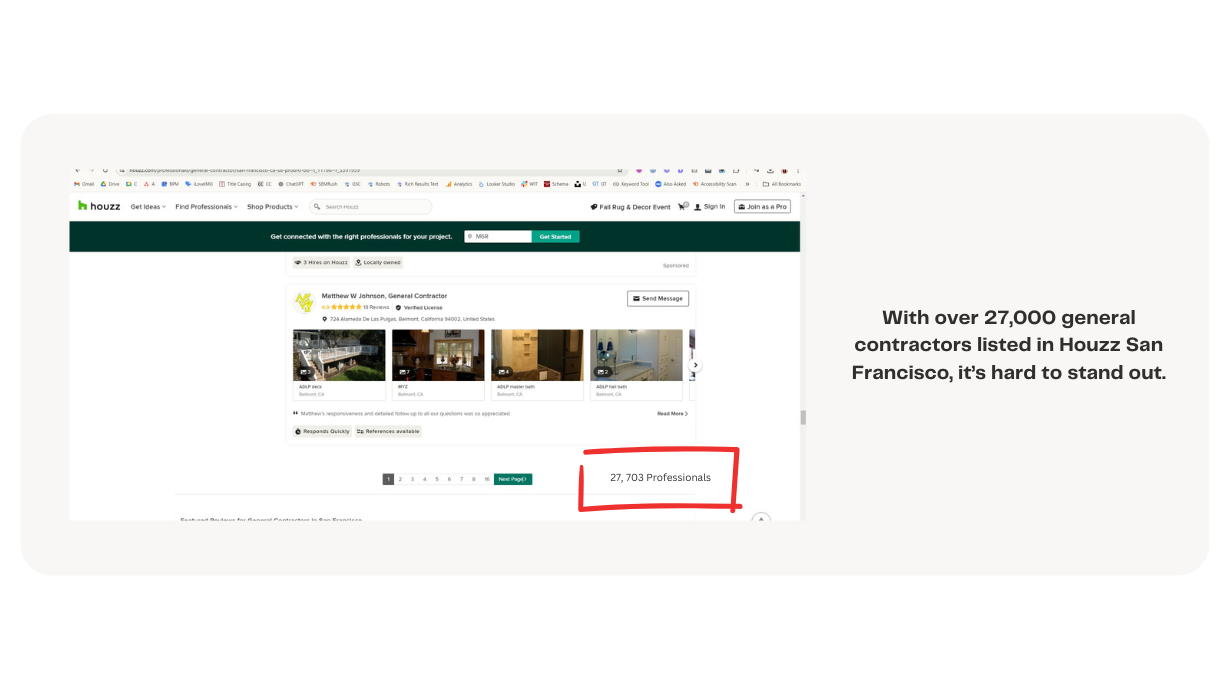
As a general contractor, it’s hard to stand out among 27,000 other contractors. Now, what if one of them specialized? Say they were experts in childcare construction design and the specialization was in their name, bio and all over their portfolio or socials. They would stand out a lot more on Houzz than the generalists and see more success on the platform.
This is positioning. It’s what makes you different 4 and is typically based on your aesthetic, location or specialization (e.g., restaurants, basement renovations, etc.)
What makes you the obvious choice?
Positioning isn’t just a buzzword—it’s the foundation of your visibility and credibility.
Ask yourself: What type of work are we best at? What kinds of jobs do we want more of? What sets us apart from a crew down the street?
Your positioning could focus on:
- Service specialization – e.g., commercial interiors, concrete forming, site services, design-build
- Industry niche – e.g., healthcare, education, industrial, multi-residential
- Geography – e.g., “Western GTA core specialist”
- Capabilities – e.g., self-perform crews, complex crane logistics, LEED-certified builds.
Examples of strong positioning:
- “The go-to GC for LEED Gold educational facilities in Southern Ontario.”
- “We specialize in multi-crane, tight-core urban tower lifts.”
- “Fleet of Tier 4 Final booms, ready for night or weekend rental.”
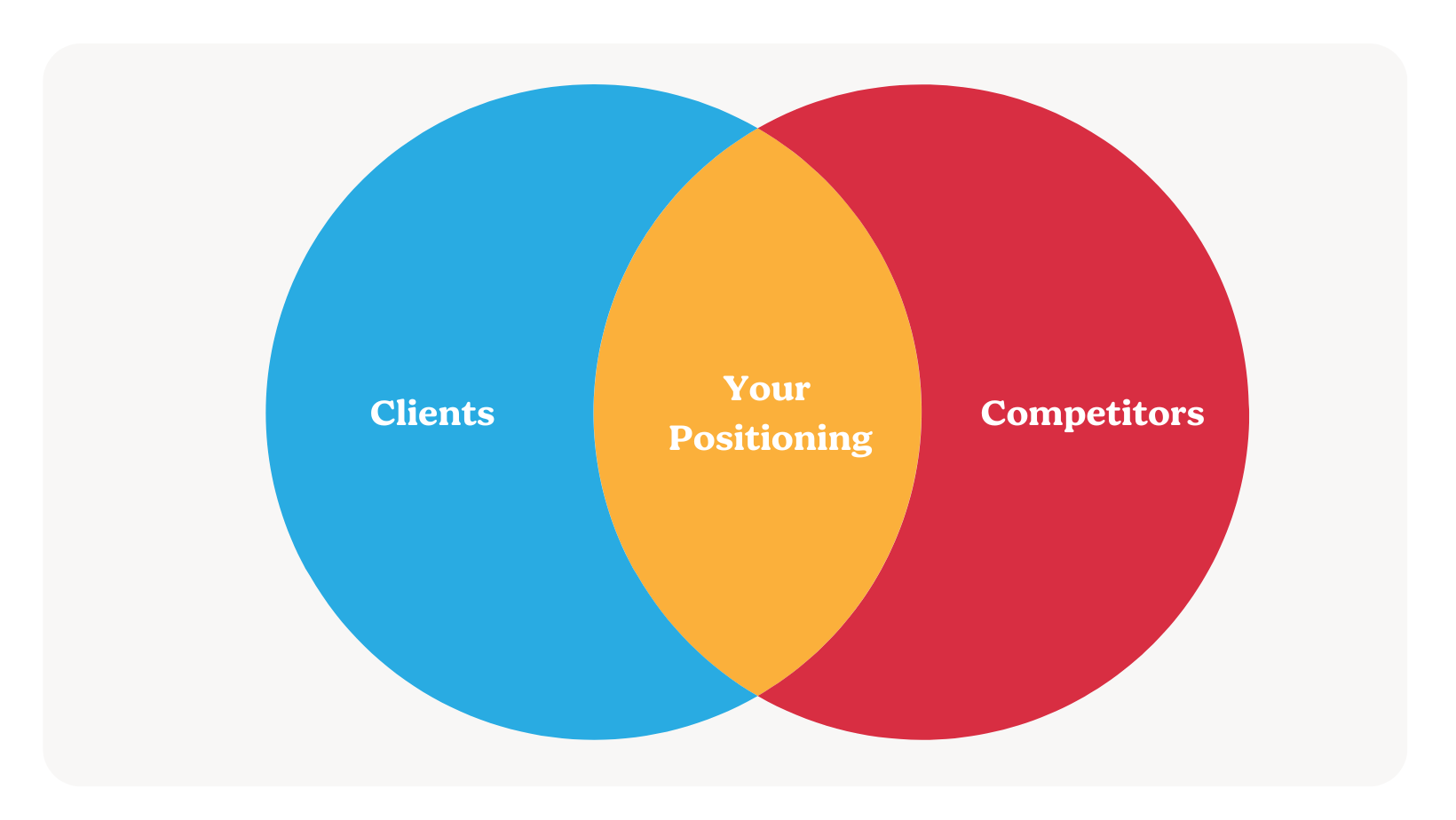
The more specific and visible your positioning, the easier it is for clients, referrers, and partners to remember and recommend you.
When your positioning is clear across your website, proposals, LinkedIn, and even your jobsite branding, clients understand why they should choose you over another company.
Step 5: Build Your Marketing Strategy
Once you know your goals, ideal clients, and positioning, the next step is building a marketing strategy that attracts the right projects.
At this stage, most construction companies ask:
- Where and how should I market my construction company?
- Do we invest in digital marketing or traditional methods like networking and referrals?
- Which channels will actually bring in qualified leads—not just website traffic?
- How do I show up on each channel? What do I say?
A successful marketing strategy is centred on the target customer. When you know the target customer inside and out, the questions above will be easier to answer.
We use an exercise called the customer journey to understand how your potential client goes about looking for and purchasing your type of services. A customer typically goes through three key stages before making a purchase:
- Awareness
- Consideration
- Purchase
The customer journey can help you breakdown your marketing strategy and prioritize your marketing efforts.
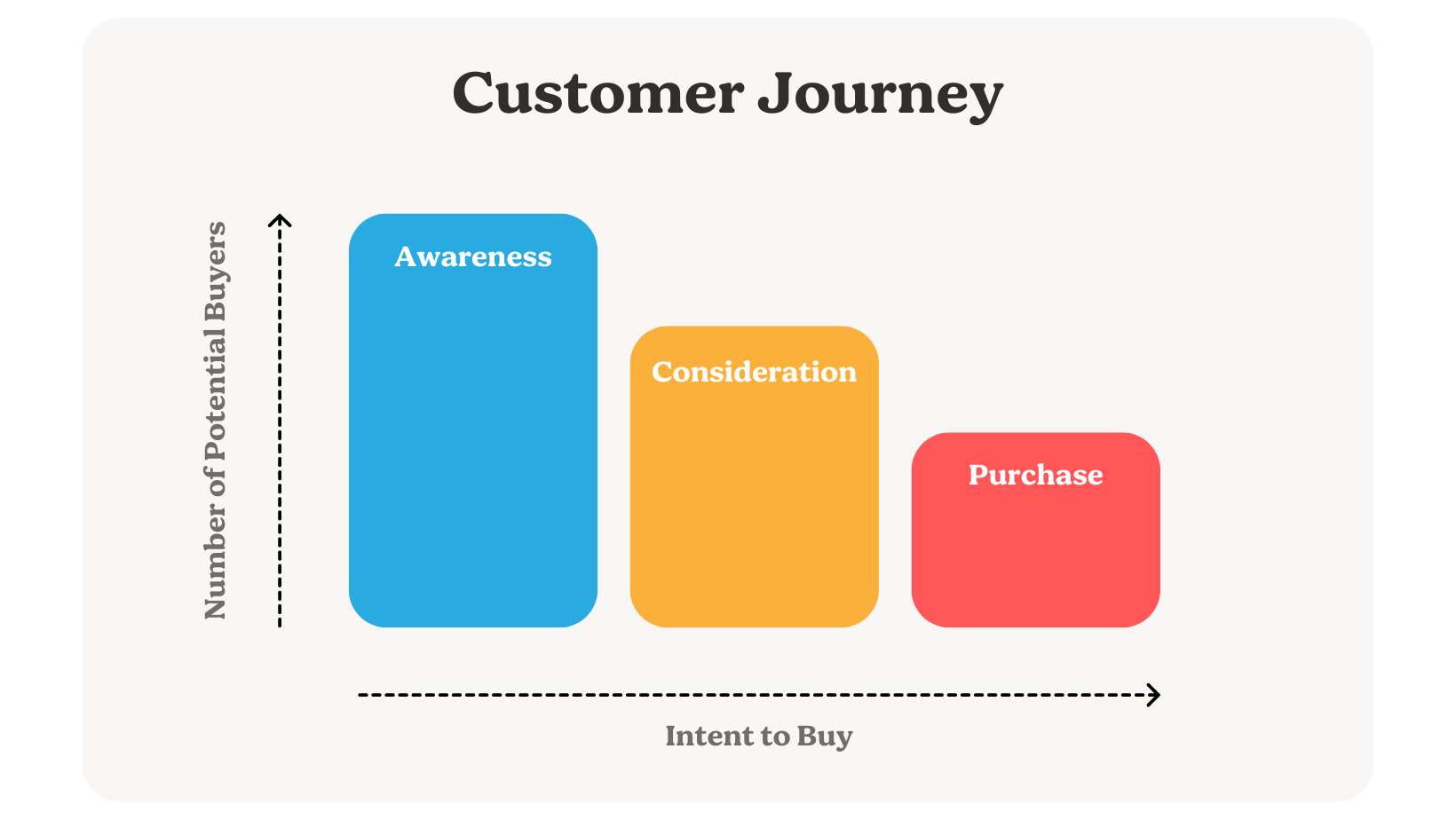
Factoring it into your marketing will help you create content that ‘meets’ your ideal client at every step of their decision-making process and nudge them forward in your sales pipeline.
Research the Awareness Stage
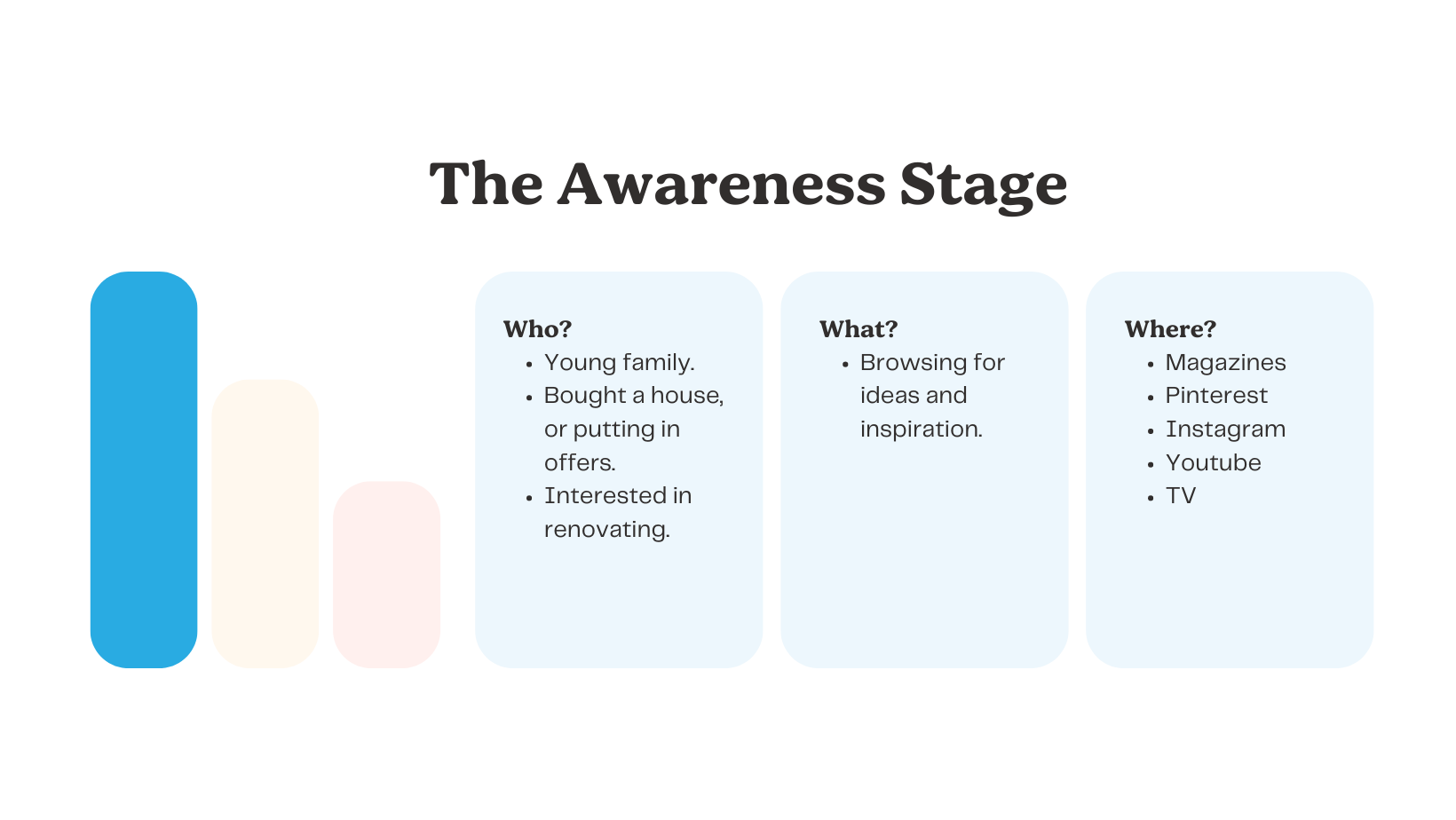
When they’re in the Awareness stage:
- They’re not actively hiring yet—but they’re noticing who’s on what site, hearing supplier names passed around, or seeing equipment wrapped with bold branding.
- They’re driving past your hoarding signage, skimming industry newsletters, scrolling LinkedIn, or stopping to watch a crane lift on a downtown site.
This is the information-gathering stage. Your ideal client is dreaming, getting inspired, and figuring out what they like.
To market to Awareness stage customers: Create They’re not actively hiring yet—but they’re noticing who’s on what site, hearing supplier names passed around, or seeing equipment wrapped with bold branding.
They’re driving past your hoarding signage, skimming industry newsletters, scrolling LinkedIn, or stopping to watch a crane lift on a downtown site.
What to publish: Short reels of your crew in action, behind-the-scenes project clips, “5 things we learned on this retrofit” posts, safety week photos, or site signage that includes your URL and QR code.
Research the Consideration Stage
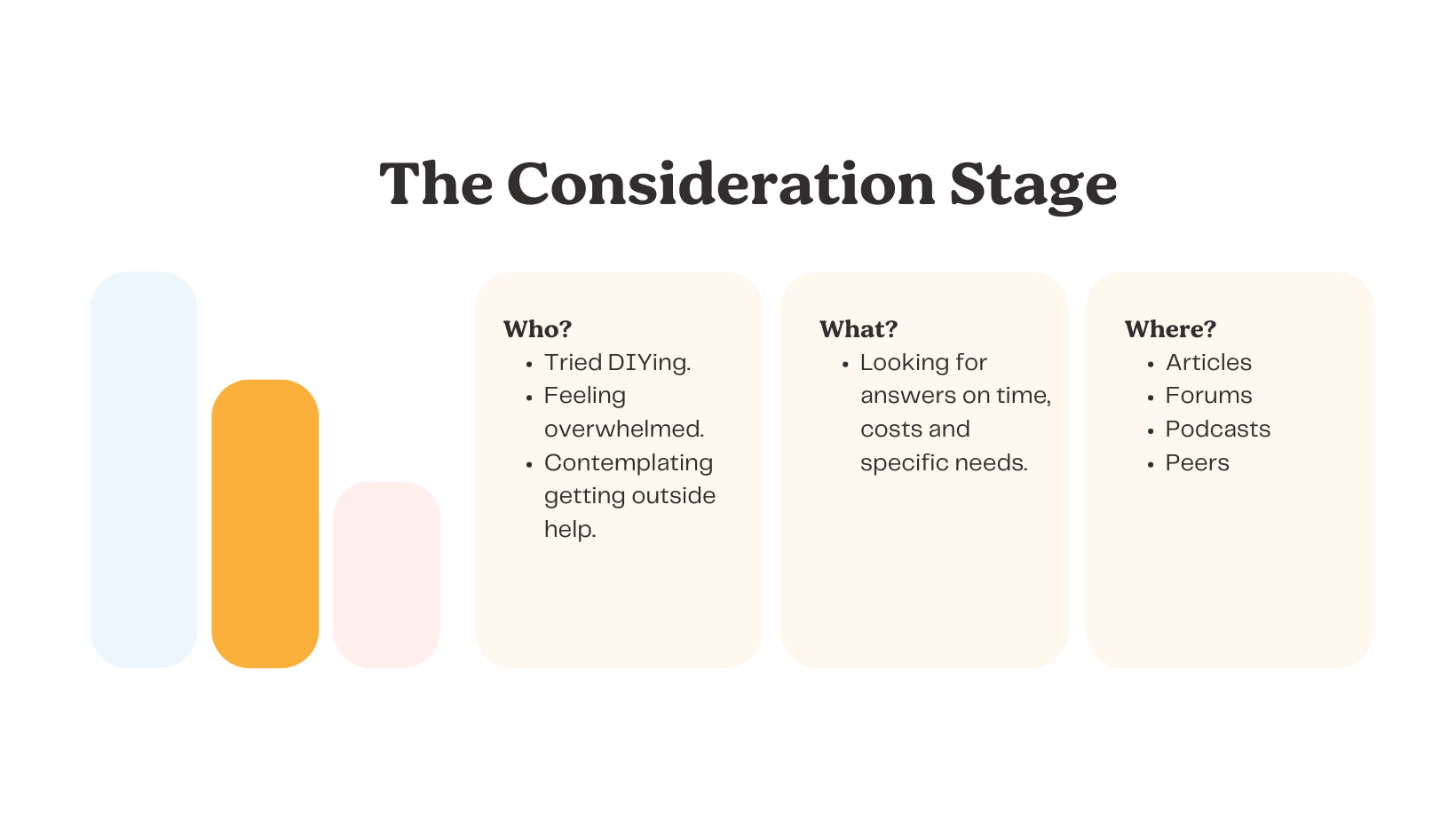
After is the Consideration stage. This is when your ideal client starts comparing options, checking for fit, and estimating budgets.
To market to Consideration stage customers: Publish informative content like case studies, blog posts, explainers like “design-build vs. lump-sum,” “rental vs. purchase,” or how you handled unexpected scope changes.
Research the Purchasing Stage
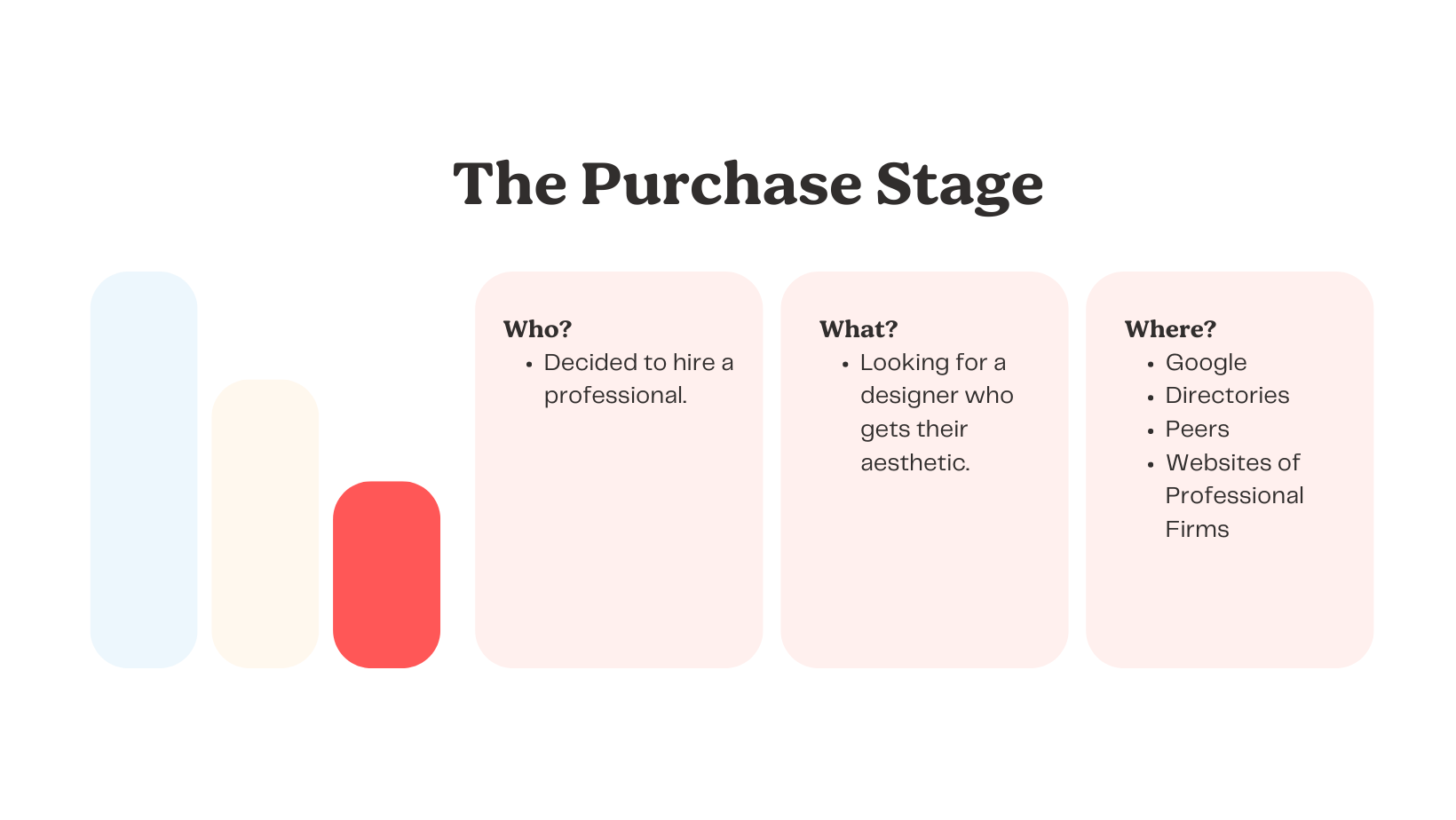
The Purchasing stage is the last step in the journey, where potential clients eventually commit to a solution (which could be you!).
They’re shortlisting companies and looking for reasons to trust you.
To market to Purchasing stage customers: Use testimonials, Google reviews, past project stats (on-time % or safety record), and a contact page that makes it easy to request a quote or set up a call.
A strong marketing strategy speaks to all three stages, not just one. If your business only posts project photos but has no proof of results or no call-to-action, you will lose opportunities to competitors who communicate more clearly.
Now that you understand how potential clients move from awareness to decision, the next step is to turn your strategy into a practical action plan.
Step 6: Marketing Plan for Construction Companies
Construction companies often start with the Awareness stage because it’s the first step of the customer journey. However, focusing on the Considering and Purchasing stage clients first is much more effective since these people are already looking for ideal-fit companies and are most primed to buy.
Then, you can work backward to create an action plan for your marketing.
For example, a commercial contractor would benefit more from updating their website portfolio and improving LinkedIn visibility before worrying about TikTok or brand storytelling.
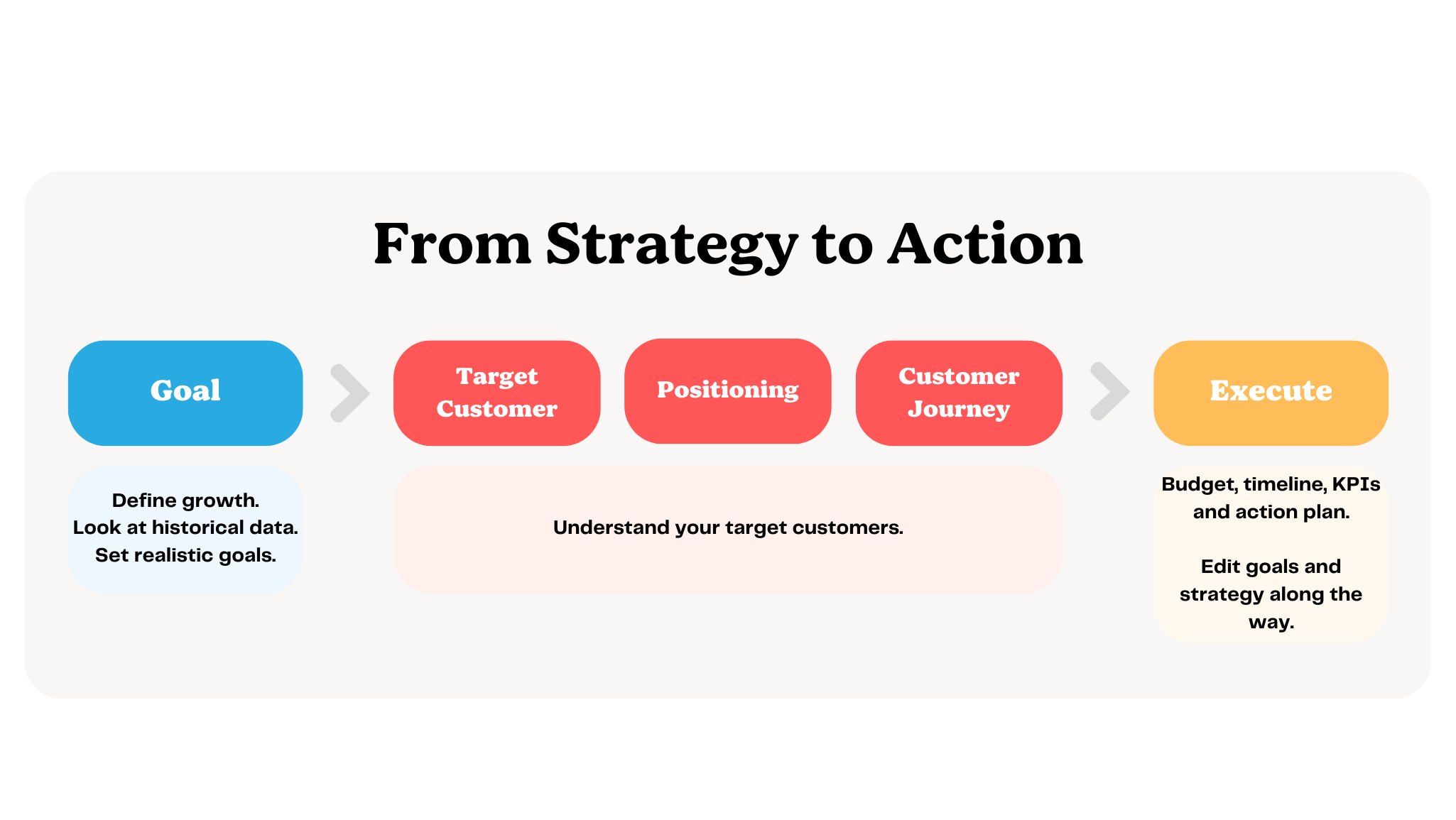
We are huge proponents of marketing strategically, and not just for the sake of it. But how much time (and, let’s be honest, money) does it take to execute a construction marketing strategy, and what kind of results can you expect?
We’ll break it down for you.
Plan Timelines & Milestones
For most construction companies, a 6–9 month execution window is ideal to see clear trends in:
- Qualified website inquiries
- Bid invitations
- Referral activity
- Repeat client opportunities
- Search visibility and website traffic
Review performance monthly to stay on track and quarterly to adjust strategy based on what is working. Avoid constantly switching tactics—inconsistent marketing produces inconsistent results. Commit to the plan long enough to collect data before making changes.
Marketing Budget
Marketing requires both time and budget to work properly. The right investment depends on your business size, project values, and growth goals, but it should be realistic and sustainable.
We typically recommend:
- Minimum $2,500–$5,000/month for mid-sized GCs, builders, or specialty trades
- 10–15 hours/month of internal time for marketing execution (or outsource it)
And when we say marketing, we don’t mean just launching a website and waiting. We mean:
- Creating content that educates or attracts the right clients
- Showing up where your buyers are looking (Google, LinkedIn, associations)
- Building credibility before they ask for your quote
Marketing is an investment. Just like a construction project, marketing performs best when there is a clear plan, defined responsibilities, and consistent execution rather than one-off efforts.
Maximizing your budget doesn’t always mean staying local. For many U.S. firms, looking ‘North of the Border’ provides a unique opportunity to access high-level strategy at a better value. Check out our guide on why American companies should hire Canadian marketing agencies to see if a nearshore partner is the right move for your crew.
Typical Results of an Action Plan
Within the first 3–6 months, you should see measurable growth in traffic, visibility, and lead volume. You may not close major deals immediately—especially with long sales cycles—but you will:
- Show up more frequently in local or trade-specific searches
- Get more inquiries from prospects who already know your work
- Build authority with decision-makers (even if they’re not ready yet)
These early wins give you the data you need to adjust your messaging, focus on better-fit jobs, and close more strategic opportunities over time. Treat marketing as a long-term asset—not a quick-fix expense—and it will compound.. Like any construction project, you’ll get better results when it’s built on a strong foundation—with a clear plan, consistent effort, and the right tools for the job.
Even if the leads you’re bringing in within this timeframe aren’t your perfect fit client, increasing traffic, visibility, leads, and inquiries will give you more data to inform decisions moving forward and eventually boost your bottom line.
How Marketing Impacts Sales
Marketing should support your sales process—especially when most commercial or public-sector work hinges on relationships, referrals, and competitive RFPs. The larger the contract value, the longer and more complex the sales cycle.
That’s why your marketing shouldn’t be measured just by signed deals—but by micro-metrics that move the sale forward:
- Did you get invited to prequalify?
- Did someone download your capability statement?
- Did your LinkedIn content prompt a referral or partner DM?
- Are PMs showing up to your website from a QR code on your hoarding sign?
If marketing helps you land more discovery calls, shortlist invites, walk-throughs, or “let’s grab coffee” referrals—that’s working. You’re now in conversations you weren’t in before.
It’s not just about volume—it’s about velocity and fit. Marketing helps get you in the room, build trust faster, and influence the outcome before the RFP drops.
Step 7: Should You DIY Marketing or Hire a Construction Marketing Agency?
Deciding whether to handle marketing in-house or work with a partner depends on your priorities, available time, and growth goals.
Doing it yourself is a practical option if you have:
- Someone on your team who can consistently manage content, website updates, and outreach
- The time to learn and apply best practices
- A clear plan and accountability to stay consistent
However, many construction companies choose to partner with a specialized marketing team to save time and speed up results. Working with experts gives you access to proven systems, industry knowledge, and technical support without hiring internally.
However, another factor to consider is the time it would take to reach your goals. At Findable Digital Marketing, we aim to significantly increase our clients’ search result rankings in a three-kilometre radius in just 21 days and triple sales inquiries within 12 to 18 months.
If the best next step for you and your construction business is to tackle your marketing strategy on your own, check out our other blog posts or subscribe to our monthly newsletter to get our top tips.
But if you’d rather leave the marketing strategy work to the experts and focus more of your efforts on your zone of genius (designing beautiful, functional spaces), we’d be happy to help you. Book a call with us.
As an agency specializing in digital marketing for construction companies, we help contractors and builders increase qualified leads and win better projects. If you don’t want to DIY a marketing plan, let our team build one for you.
Step 8: How to Maintain and Improve Your Marketing Efforts
The most successful construction marketing strategies need nurturing. As time goes on and you execute your plan, stop to reflect and analyze the data.
Not only will you find ways to make the process more efficient and enjoyable for you, but using data and feedback will give you the direction you need to improve the strategy and see greater returns from it.
We suggest doing a formal retrospective every quarter.
Ready to Take the Next Step?
Marketing is like any other part of your construction business. It works best when it is built on a strong foundation, has a clear plan, and is managed consistently over time. The companies that win more bids and better projects are the ones that stay visible, communicate their value clearly, and make it easy for people to trust them.
If you want support building or improving your marketing system, our team works with construction companies, subcontractors, and builders that want to grow with clarity and simplicity. We build practical strategies that fit real operations and real teams. Book a call to learn more about how we can support your goals.