Quick Summary

The new Zoe Feldman website is a perfect case study in SEO for interior designers. Once minimalist and image-heavy, her site is now built with strategy—think keyword-rich copy, detailed service pages, and storytelling behind every project. It’s proof that beautiful design alone isn’t enough. When you pair aesthetics with SEO, structure, and psychology, your website becomes a business tool, not just a portfolio. Here’s what designers can learn from Zoe’s approach—and how to make their own sites just as strategic and searchable.

→ Enjoyed reading this? Join the email newsletter.
Zoe Feldman Design recently launched a new website.
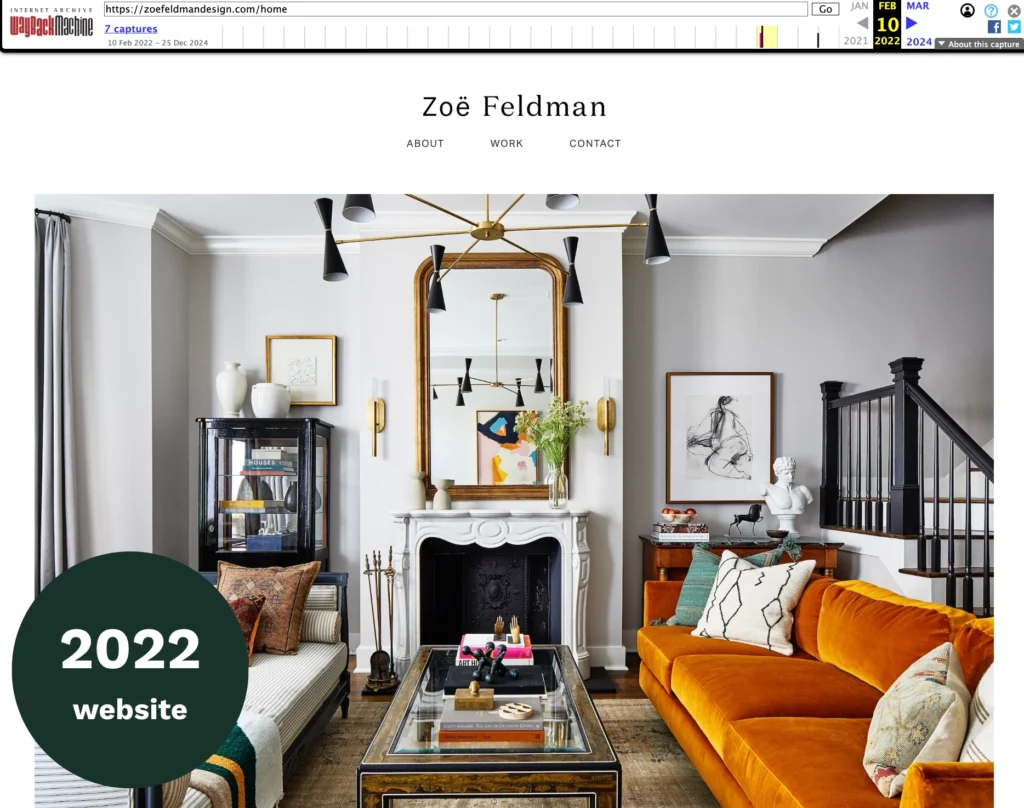
The old site?
The about page only showed her name and photo.
It looked like an art gallery.
The homepage had very little copy.
The portfolio was just a photo gallery with no storytelling.
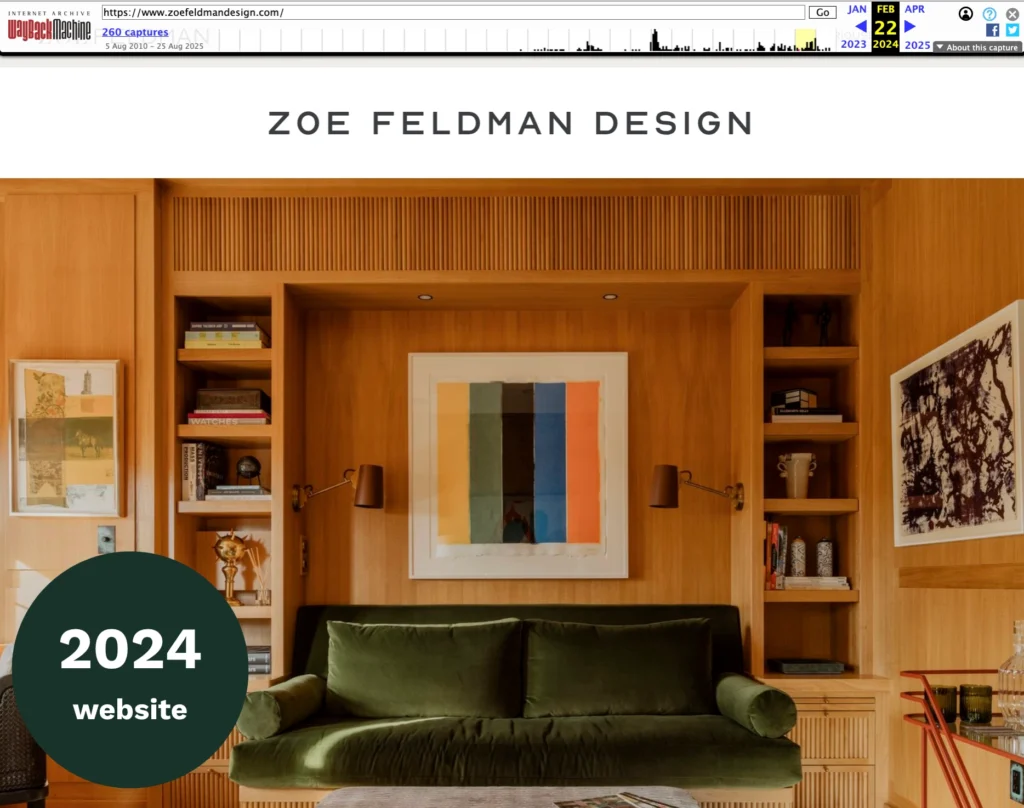
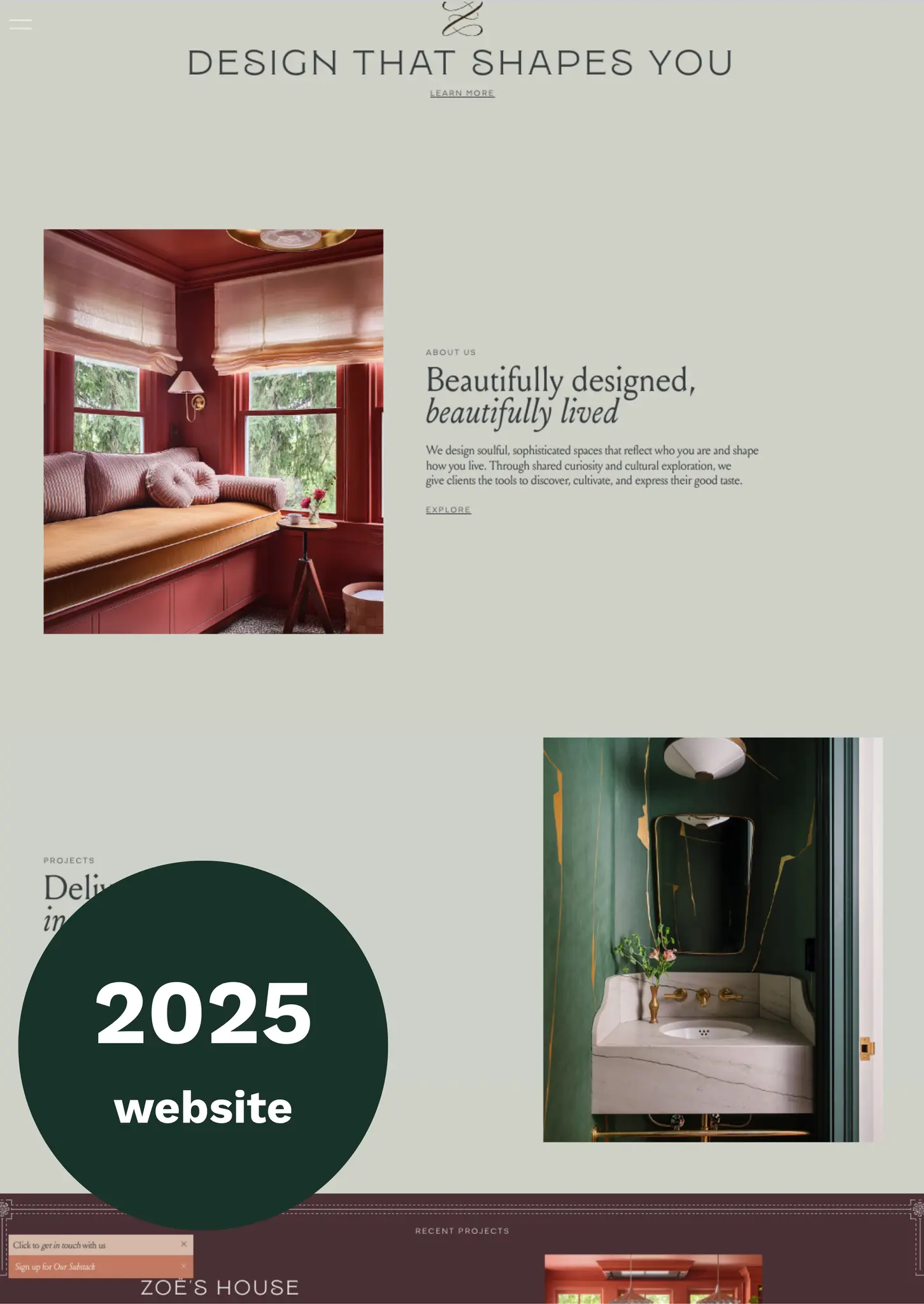
The new site?
- She even launched an email newsletter.
- The homepage has 200 words, with keywords used eight times.
- Each project includes an SEO-friendly description.
- There’s a webpage for each service, with starting prices listed (gasp!).
- The about page introduces her full 30-person team.
- The contact form has nine qualifying questions (double gasp!).
The old website was beautiful. So why did she bother changing it?
Because Pretty Isn’t the Same as Strategic
The old website was totally fine. It looked great, had beautiful photos, and did a good job explaining who she was.
But the new website? It’s strategic.
It’s built with SEO, sales funnels, and consumer psychology in mind. The tech behind it is modern too, built on Framer.
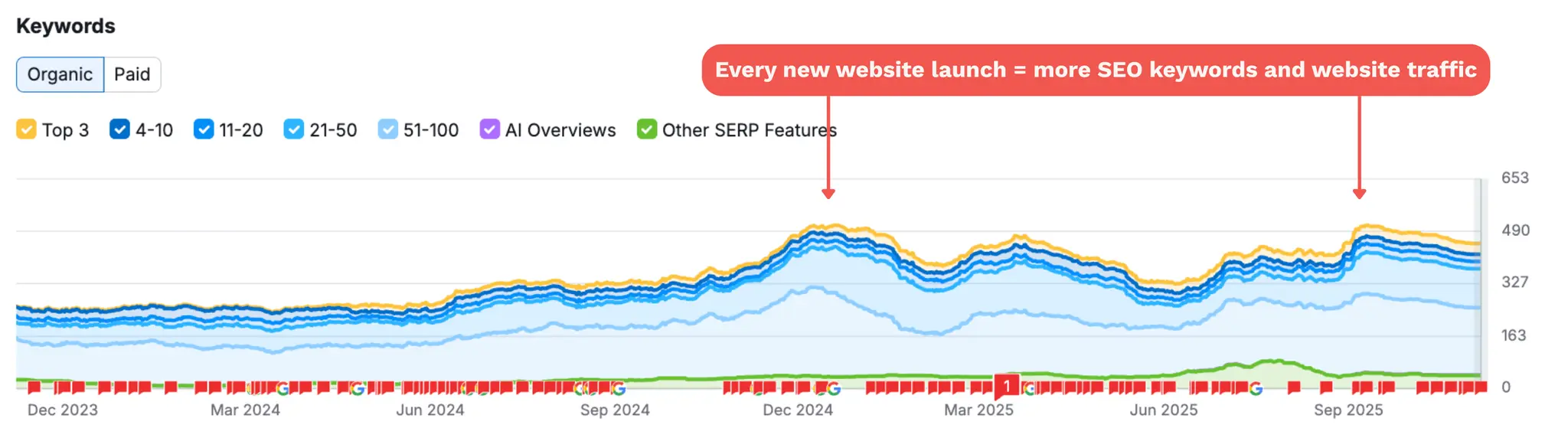
Since launching, analytics show she’s getting more keyword rankings and press mentions. And over time, she’ll likely see more traffic and inquiries — not just from Google, but from AI search tools like ChatGPT.
What You Can Learn from Zoe Feldman
Zoe Feldman’s website is more than a design upgrade. It’s a mindset shift. She treats her online presence as a business tool, not just a portfolio.
Here’s what you can take from her approach:
- Copy her tactics. On the surface, you can copy what she’s doing. Tell the stories behind your projects, have a dedicated page explaining your services, and don’t be afraid to use SEO or sales-driven content. Your website doesn’t need to look like a minimalist art gallery to be effective.
- Stay forward-thinking. Keep up with how clients use the internet to find and hire professionals. Update your site so it’s responsive, fast, and aligned with how people (and AI tools) search today.
- Borrow from other industries. To be frank, Zoe’s website isn’t groundbreaking. It’s pretty standard in other fields. E-commerce, law, and healthcare have used SEO, service pages, and sales funnels for years. But in design and construction, it’s still rare. Zoe is practicing boundary spanning — borrowing what works elsewhere and applying it to her own industry.
By the way, Zoe Feldman is not a client. But I love studying and learning from others.
What do you think? Do you want more case studies like this?
Daniela