
Many design and build firms treat their websites like online photo albums. You post project photos, list the city, and hope clients call. Nice pictures get attention, but they do not build trust on their own.
Selling architecture, engineering, or custom construction services is not like selling products online. Your services cost thousands or millions of dollars. They take time and carry real liability. Before clients sign a deal, they need to see how you solve problems, handle delays, and manage project risks.
For the first 7 to 15 years in business, most firms grow purely through word-of-mouth. But when referrals slow down, your website needs to do the heavy lifting. Once you set your aec marketing strategy, turning your photos into a real architecture case study is the next step to win new clients.
The Anatomy of an Architecture Case Study That Converts
A simple photo page shows a finished job. A strong architecture case study tells the story of how you got there.
To turn project photos into leads for construction and architecture firms, every case study needs four simple parts:
- The Client Problem: What challenge did the client face before hiring you? Start with the real obstacle. Did they have a tight lot, strict community rules, or an old layout? Were they worried about budget limits or permit delays? Naming the problem helps future clients see themselves in the story.
- The Strategic Plan: What was your design or build solution? Explain the key choices your team made to solve the client’s problem. Show how your team balanced style, function, and local building rules.
- The Behind-the-Scenes Work: Show how you work. Walk through the real steps of construction or design. Share how you handled site delays, framing issues, or material choices. Showing your problem-solving in action proves your skill.
- The Clear Result: End with the outcome. Share photos of the finished space alongside client reviews, project facts, or custom features. Explain how the new space improved the client’s life or business.
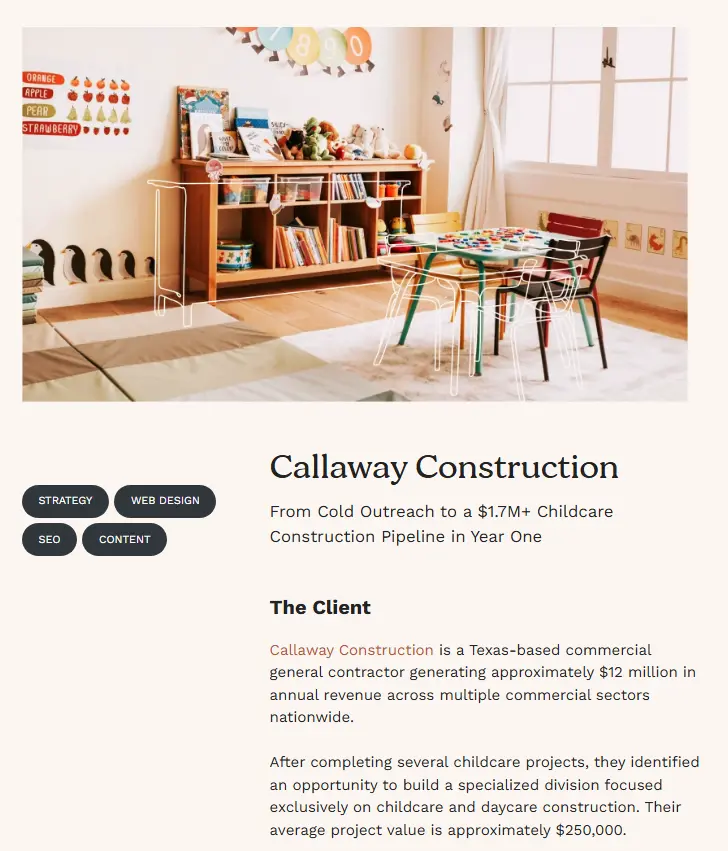
Key Elements Every Case Study Page Needs
To make your architectural case studies easy to read, include these core items on every page:
- Project Fast Facts: List the project location, square footage, building type, and services provided at the top of the page.
- Professional Photography: Include six to twelve high-quality photos that highlight the exact work you want to win more of.
- Client Testimonial: Add a direct quote from the client talking about what it was like to work with your team.
- Clear Call-to-Action: End the page with a simple button inviting readers to discuss their upcoming project.
When you structure your case studies this way, clients can picture working with your firm. Your site moves from a simple portfolio to a sales tool that turns visitors into qualified inquiries.
The Content Repurposing Engine (1 Project = 10+ Pieces of Content)
Many firm owners think content creation takes too much time. You might feel like you need a fresh idea every week.
In a good aec content marketing plan, you do not need lots of new ideas. You only need one good project.
When you write one strong case study, do not just post it and walk away. You can turn that single story into ten or more pieces of content:
- Short Social Posts: Pull two key takeaways or design tips from your case study. Share them as text posts on LinkedIn or Instagram to start conversations.
- Photo Carousels: Create a slideshow of before-and-after photos. Add short notes explaining the design problems you solved in each slide.
- Quick Video Clips: Record a short video on site. Talk through how your team solved a tough site issue or picked a key material.
- Newsletter Updates: Share the project story in an email newsletter. Send it to past clients, real estate partners, and subcontractors to stay top of mind.
When you reuse your case studies this way, you save time. You build your search ranking and brand authority while keeping your team focused on client work.
Leveraging Newsletters for Referral Growth
Email newsletters are one of the best tools for relationship-based marketing. Unlike e-commerce brands that email thousands of strangers, AEC firms email a tight list of past clients, partners, and friends.
When you send a project case study in your newsletter, always include a clear “Tell a Friend” section. You can even offer fun referral gifts, like a dinner reservation at a local restaurant for anyone who introduces you to a new client. Reusing your case studies in email updates keeps your firm top of mind when past clients hear a friend planning a build.
By reusing your case studies across channels, you save time and money. You build your search ranking and brand authority while keeping your team focused on client work.
Answering Objections with Expert Opinions
A good case study does more than show pretty photos. It answers the questions holding your future clients back.
In design and build work, clients worry before signing a deal. They worry about costs, delays, or bad materials. You can use your case studies to answer these fears head-on.
Here are a few ways to add expert advice to your project stories:
- Answer Big Questions: Explain if a client should hire an architect or builder first. Share what the first month of work looks like.
- Explain Material Choices: Share why you picked one material. For example, explain why you told a client to avoid marble counters because they stain.
- Talk About Costs: Be open about why custom work costs what it does. Share how your team keeps project timelines on track.
When you share real advice, you build trust with qualified leads. You show future clients how you think. This makes it easy for them to reach out.
Turn Your Portfolio into Your Best Sales Tool
Case studies are a great way to grow your firm. When you tell the story behind your work, you build real trust.
By turning your project photos into detailed case studies, answering client questions upfront, and reusing your content across channels, your website becomes an active lead generation engine. Instead of a passive photo album, your portfolio works constantly to bring in qualified inquiries.
Ready to turn your project photos into a real sales system? Contact our team at Findable Digital Marketing today. Learn how our Soil to Apples™ Process can build your search authority and bring in qualified leads.